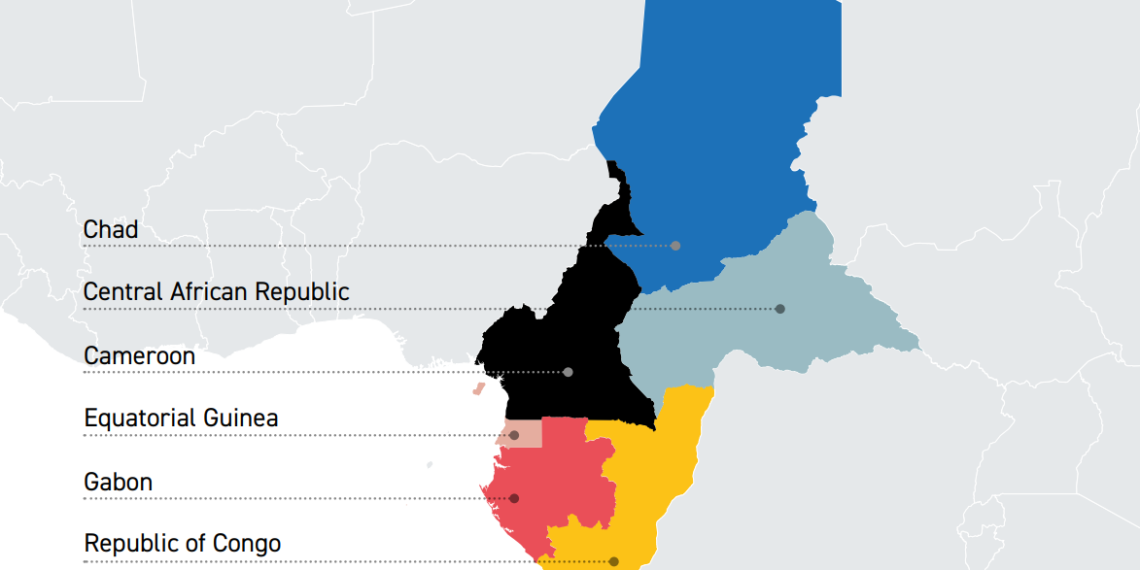
The World Bank is calling on Central African governments to accelerate structural reforms and rethink how they manage national wealth, as new data shows economic growth is slowing and per capita wealth is in decline.
In its Economic Barometer released in December 2025 for the Central African Economic and Monetary Community, the World Bank warns that short-term gains are being undermined by weak governance, ecological degradation and a lack of productive investment.
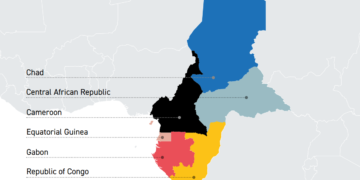
The report recommends six areas for urgent action across the six member states.
Strengthening public financial management is central, with a focus on improving the quality of spending, tightening oversight of state-owned enterprises and making procurement more transparent.
Governments are also encouraged to invest more in human capital, including education, skills training, health and social protection, while also closing gaps in energy, transport and digital infrastructure.
Natural resources, long the region’s economic backbone, are being depleted faster than they are renewed.
The Bank calls for stronger regulation in extractive industries and more local processing to retain value and create jobs.
It also urges states to tap into international climate finance and advocate for fair compensation for the carbon storage and biodiversity services provided by the Congo Basin forests.
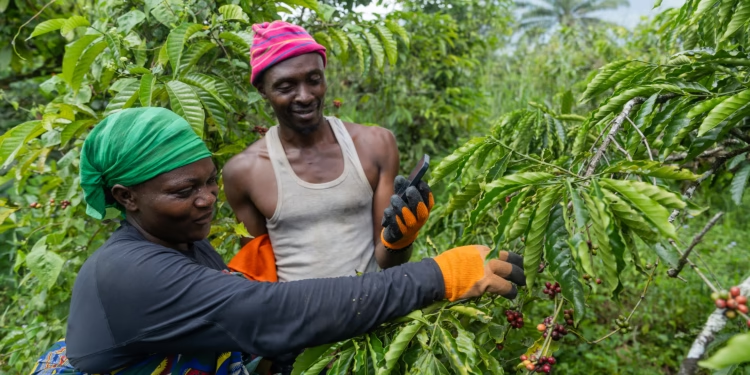
To reduce overreliance on oil and minerals, the report highlights the potential of ecotourism, agroforestry and medicinal plant research as new sources of sustainable wealth.
Finally, deeper regional cooperation is seen as essential to align policies, pool investments, and attract external funding.
The report’s findings point to a region at a turning point. Without bold reforms and stronger institutions, the economic gains of recent years may prove fleeting, leaving populations increasingly exposed to shocks and long-term poverty.
Growth slows to 2.8% as per capita gains stall
Economic growth in the CEMAC region slowed to 3.0% in 2024 and is projected to ease further to 2.8% in 2025, according to the report.
This pace remains well below the 6.2% forecast for the West African Economic and Monetary Union.
Within the region, growth is expected to strengthen slightly in Cameroon, the Central African Republic and the Republic of Congo, while Chad and Gabon anticipate weaker performances and Equatorial Guinea faces a projected contraction.